
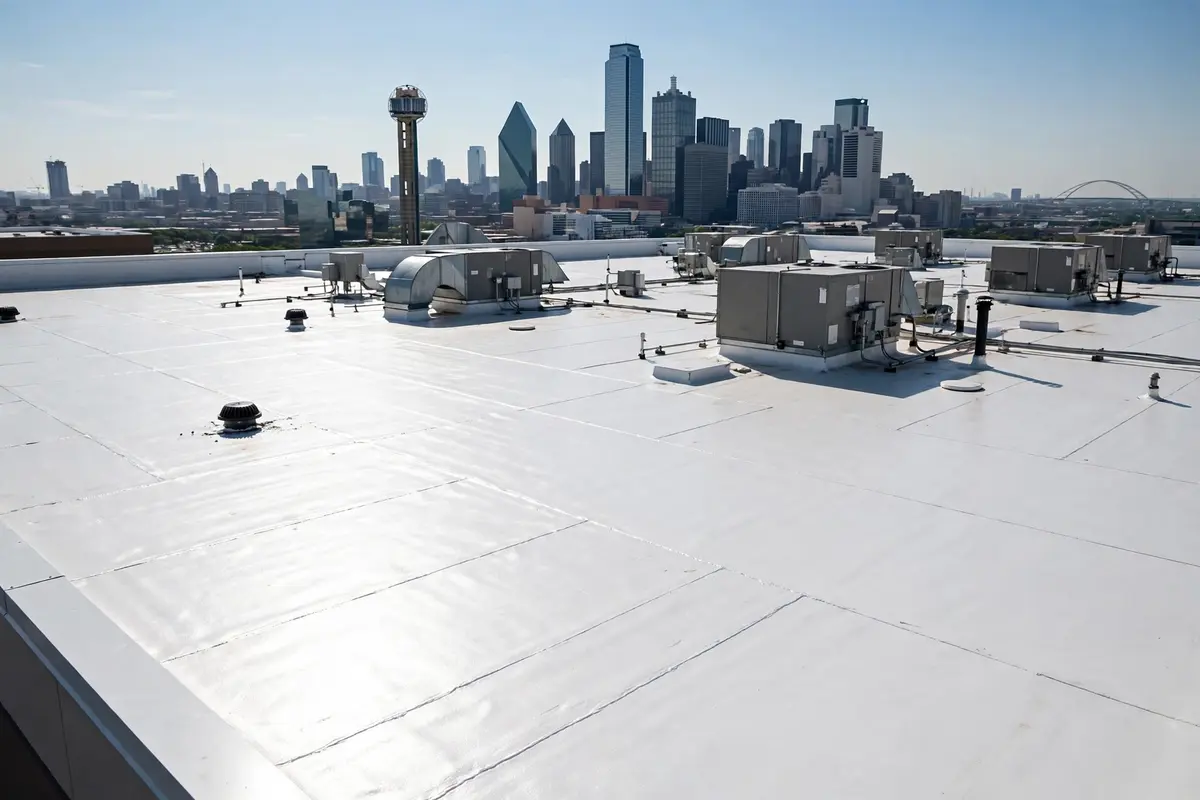
TPO, EPDM and modified bitumen — drainage first, membrane second
Flat Roofing in Dallas Built for Texas Heat and Hail
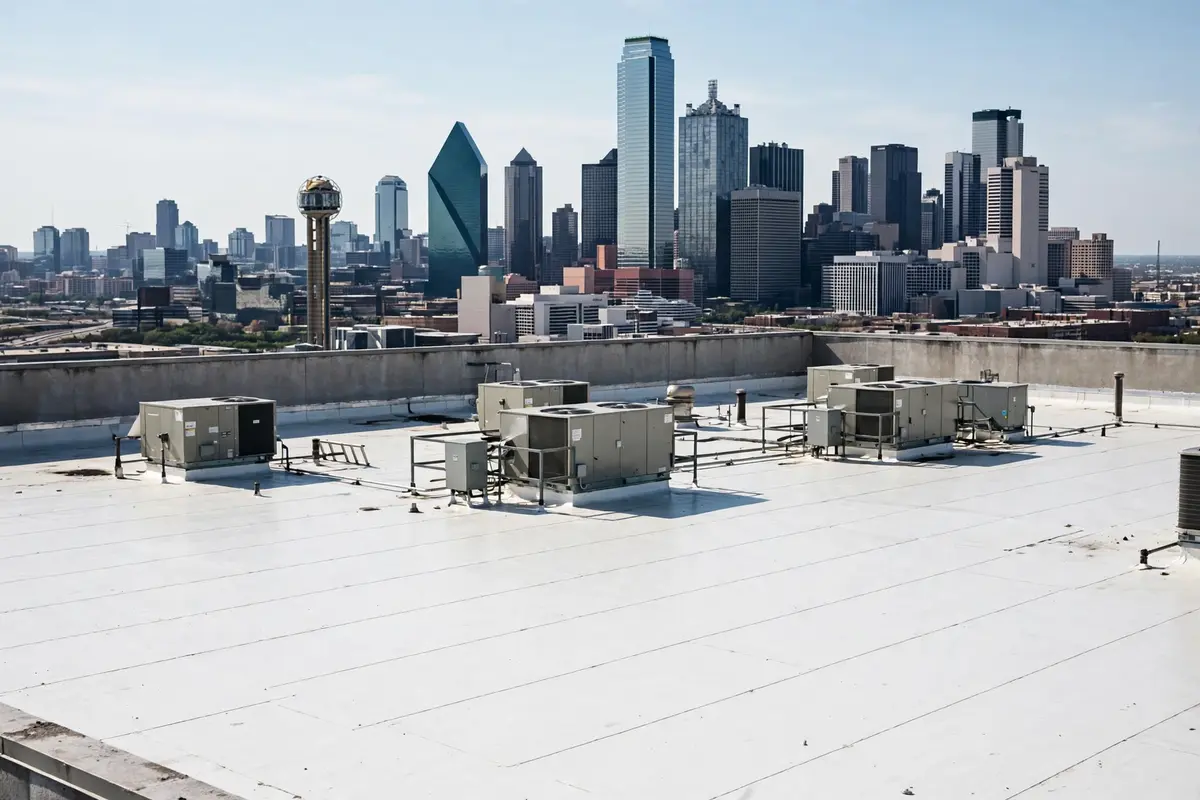
A flat roof in Dallas lives or dies by its drainage. The slope to the drains, the seams, and the flashing at every penetration matter more than the membrane itself — get those right and the system lasts, get them wrong and no membrane saves the roof. We install, repair and replace flat roofing in Dallas: TPO, EPDM and modified bitumen, on homes and commercial buildings.
Open 24 hours, every dayItemised written quotePhotos at every stage
What's included
What flat roofing covers
A flat roof is a system, not a sheet: drainage, insulation and membrane, working together — and the installation is a system job, not a single trade.
TPO membrane systems
Drainage first: falls cut into the insulation, crickets toward scuppers, and drains sized for the roof — because a flat roof that does not drain fails at the seams.
EPDM rubber systems
Insulation to the fall: tapered insulation that moves water off the field, and a thermal layer that keeps the building cool in Dallas summer.
Modified bitumen systems
The membrane: TPO, EPDM or modified bitumen, chosen for the building — white and welded, black and taped, or multi-layer and capped.
Drainage corrected first
Flashing at every parapet, curb and penetration, carried up the wall and sealed, because the field is rarely where a flat roof leaks.
Flashing at every detail
Penetrations — vents, drains and skylights — flashed with the same system as the field, not with sealant.
Permit and final inspection
A walk-through and a handover: the falls checked, the seams inspected, the drains run with water, and the roof left to drain.
Service overview
What flat roofing in Dallas actually involves
A flat roof is a system: drainage, insulation and membrane, working together.
A flat roof is not a sheet on a deck. It is a system of three parts — drainage, insulation and membrane — and the roof fails when any one of them is wrong. Drainage comes first: a flat roof is never truly flat, and the falls cut into the insulation decide whether water leaves the roof or stands on it. Insulation comes second: tapered insulation carries the falls and the thermal layer. The membrane comes third: TPO, EPDM or modified bitumen, each with its own seam, its own failure mode and its own repair. The page that follows is about the system — how the three parts work together, how they fail, and how they are repaired. The commercial engagement — multi-building work, phasing, tenant coordination — is on the commercial roofing page.
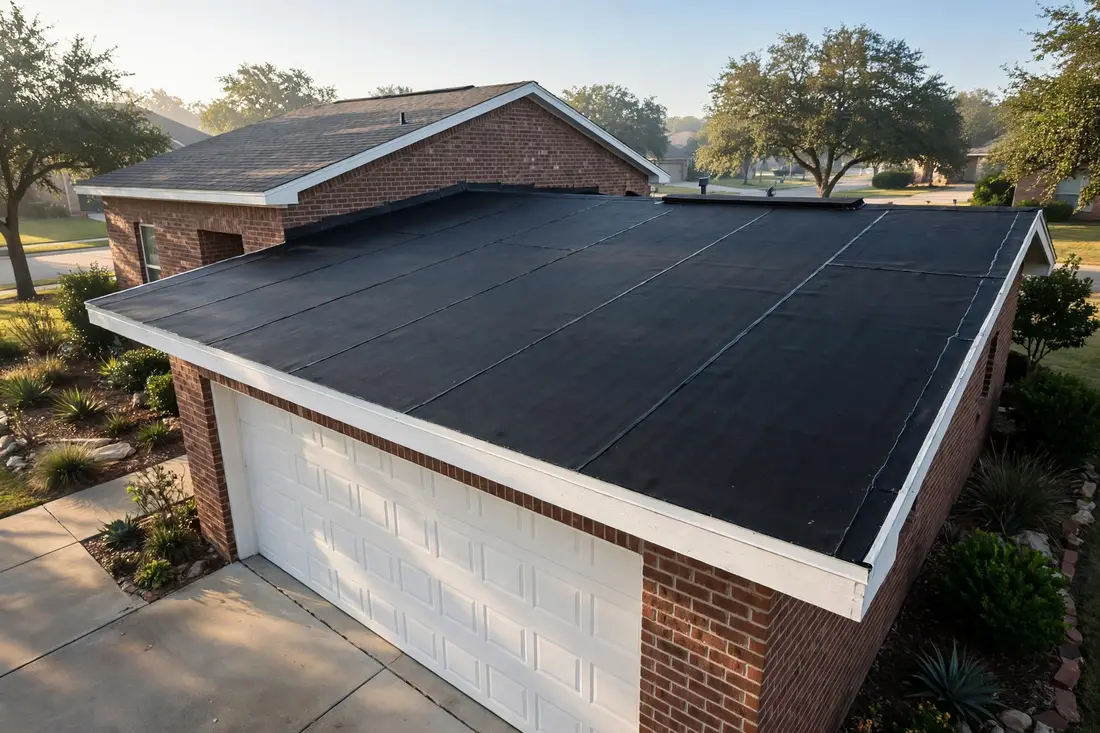
How we workWe check the drainage first, then the insulation, then the membrane — and confirm the whole system before we leave.
The service timeline
What to expect on a flat roof job
A flat-roof installation is a system job, and the sequence follows the system: drainage, insulation, membrane, then handover.
Inspection
The deck is checked and the falls are designed — tapered insulation or crickets cut toward scuppers and drains, so water moves off the field.
Scope
The insulation is laid to the fall, and the membrane is installed over it: welded for TPO, taped for EPDM, layered for modified bitumen.
Preparation
Every parapet, curb, drain and penetration is flashed with the same system as the field, and the roof is checked for ponding before the crew leaves.
Install or repair
Once the membrane has settled, the system is checked a second time — the falls verified, the seams inspected — and any joint that did not bond is repaired with the membrane's own repair.
Check and handover
The handover is a system check: the falls verified, the seams inspected, every drain run with water, and the roof left to drain.
Tools & methods
Tools and methods we use on your flat roof
A flat roof is installed as a system, and the tools follow the three parts: drainage, insulation and membrane.
Hot-air seam welder
Tapered insulation and crickets: laid to the fall the system needs, so the field sheds water instead of ponding — drainage first, membrane second.
Seam tape and primer
Hot-air welder for TPO seams, seam tape and primer for EPDM seams, torch or cold adhesive for modified bitumen plies — the membrane's own tools, not a generic kit.
Torch for modified bitumen
Seam probe for welded seams, pressure roller for taped seams, seam roller for layered seams — the inspection tool matches the seam.
Moisture survey tools
Pre-formed boots and welded collars for TPO, uncured flashing for EPDM, multi-layer flashing for modified bitumen — the flashing matches the membrane.
Drain and level checks
Reinforced membrane patches, primer-and-patch repairs and cut-and-patch re-capping — the repair matches the system it fixes.
Infrared moisture scan
Drain testing: water run through every scupper and drain before handover, because a flat roof that does not drain is a roof that fails.
Seam probe and pull test
Penetration and curb checks: every pipe, curb and rooftop unit is checked against the membrane on the field, because that is where a flat roof leaks first.
Use cases
When Dallas owners call us for flat roofs
These examples show how flat-roof work is planned around the drainage, not just the membrane.
Ponding water in Uptown
A flat roof over a retail unit that ponded at one corner after every rain, with the membrane blistering where the water sat. The low corner was built up with tapered insulation, the drains were cleared and checked for flow, and the membrane around the pond was replaced.
Low-slope addition in East Dallas
A low-slope section over a converted space with seam failures in the old modified bitumen, and a leak after every heavy rain. The old membrane came off, tapered insulation corrected the slope, and a heat-welded membrane system with new flashing went on.
Problems we solve
Problems a flat roof solves for Dallas buildings
A flat roof fails as a system — drainage, insulation or membrane — and the symptom rarely points at the part that failed. These are the problems we see most on flat roofs in Dallas.
Ponding water that will not drain
Ponding: water standing on the field because the falls were never cut. It stresses every seam on the roof and shortens the membrane's life.
Seams opening on the membrane
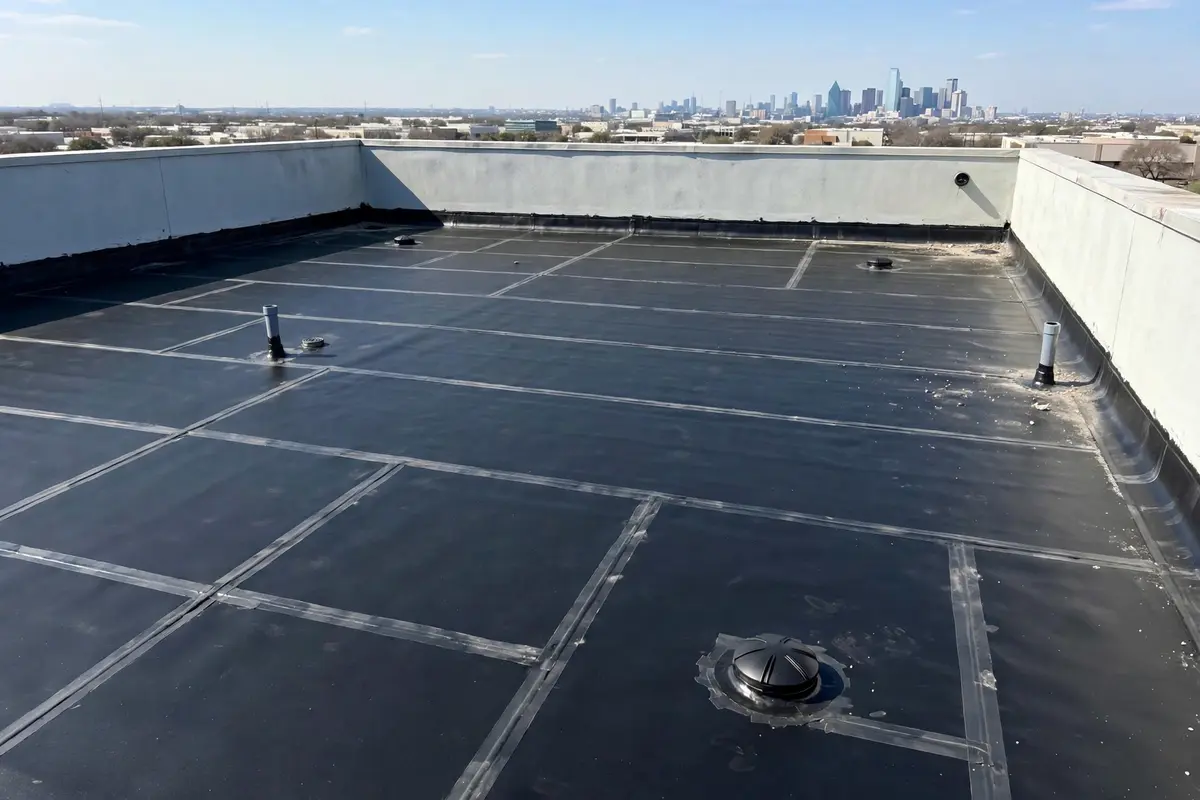
A seam that opened — a cold weld on TPO, an unprimed bond on EPDM, an unbonded ply on modified bitumen — the repair is always the membrane's own repair, never sealant.
Leaks at rooftop equipment
A leak at a drain, a curb or a parapet, where the flashing meets the field — the most common flat-roof leak, and the first place we look.
Membrane blistering in the heat
Punctures from foot traffic, dropped tools and rooftop equipment — patched with the membrane's own patch, welded, primed or re-capped.
Cost factors
What shapes the cost of a flat roof in Dallas
A flat roof is priced as a system: the falls, the insulation, the membrane and the flashing — and the inspection that finds which part failed.
Roof size and access
The falls and the insulation: tapered insulation and crickets shaped to the drains the roof needs, so the system sheds water instead of ponding.
System choice
The membrane: TPO, EPDM or modified bitumen, chosen for the building — white and welded, black and taped, or multi-layer and capped.
Drainage and insulation
The details: the same system as the field carried up every parapet, curb, drain and penetration, and the handover documented seam by seam.
Customer reviews
What Dallas Customers Say
★★★★★
“The whole job was handled smoothly, and the finished roof looks great and gives us much better peace of mind in the heat and storms.”
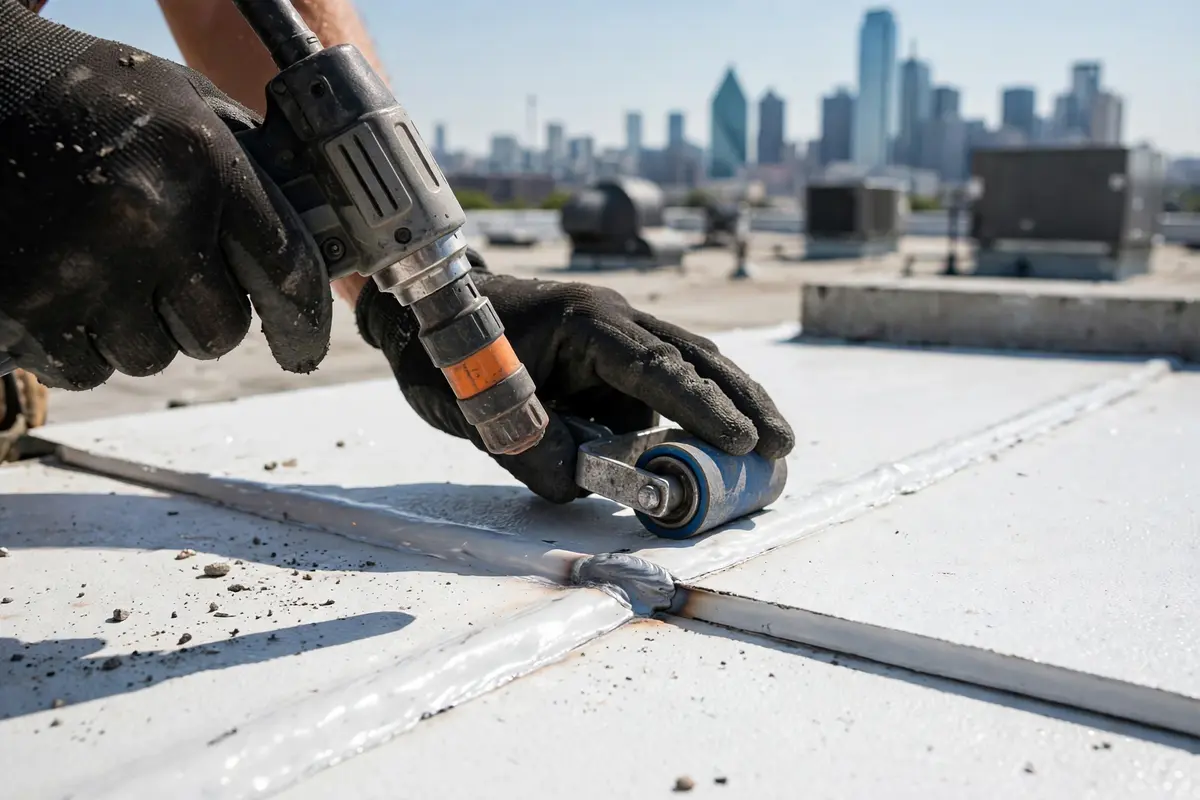
TPO, EPDM or modified bitumen — which flat roof system?
The system follows the building, not the other way round. TPO is the white heat-welded membrane most Dallas commercial flat roofs use; EPDM is the black rubber membrane that is the most forgiving to repair; modified bitumen is the multi-layer system with a granular cap sheet that takes foot traffic. The drainage, the insulation and the membrane are chosen together, as one system — and that system is what this page is about.
Why does my flat roof pond water?
A flat roof that ponds water will leak, whatever the membrane. We check the slope, the drains and the scuppers first, and correct the drainage with tapered insulation where the roof has settled. The membrane goes on after the drainage is right, not before.
Can a flat roof be patched?
Yes. A patch on TPO is heat-welded, a patch on EPDM is taped and primed, and a patch on modified bitumen is torched down. A patch done properly is as strong as the system around it. The repair starts with the cause — the drainage, a seam, or a flashing detail — and the fix follows it.
Does a flat roof need a permit in Dallas?
Yes. Dallas requires a permit before any new roof covering is applied, under City Code Chapter 52, section 301.4.6.3. The application lists where debris will go, and a final inspection follows once the work is complete and proof of disposal at a city landfill or transfer station is submitted.
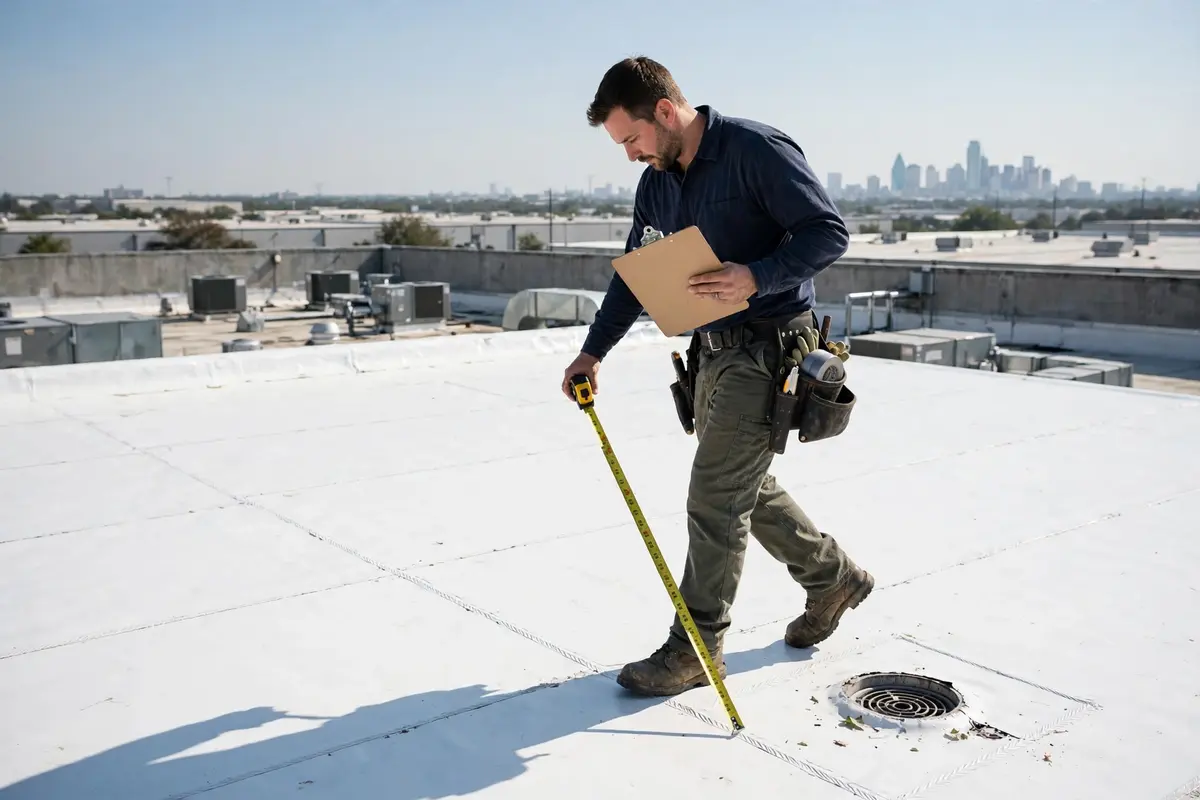
Ready when you are
Get your flat roofing Dallas TX quote
An inspection, photos, and an itemised written quote for the flat roof as scoped. Call (469) 960-7533 and tell us about your building.
Talk with the local team
Request Flat Roofing
Call us at (469) 960-7533 or send a message and we will get back to you. We are open 24 hours, every day. Tell us about the flat roof and what it is doing, and we will give you a straight answer on what it needs.